
Spain Property Investment Guide: Yields, Markets 2026
Independent Spain property investment guide for 2026, transaction data, foreign buyer share, yield bands, Costa Blanca vs Costa del Sol, and buyer red flags.
By Invest Spain Property Editorial · Updated June 15, 2026 · 23 min read
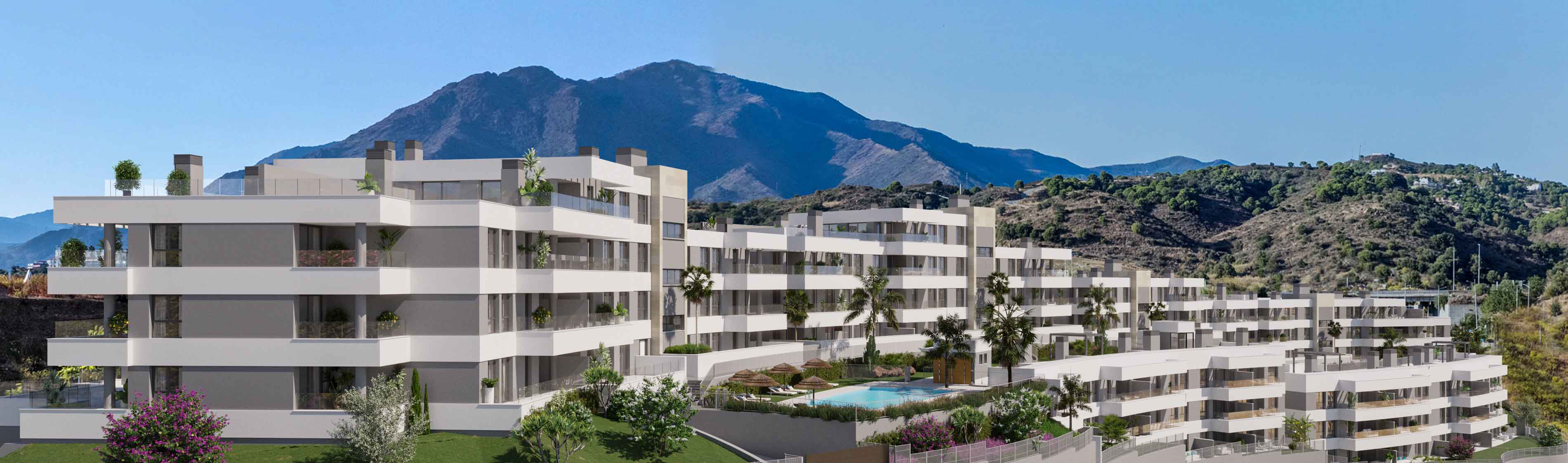
Quick answer: Spain is a large, liquid market, 714,237 residential deals in 2025 (+11.5% YoY), foreigners in roughly one in seven. Gross yields of 5–6% appear on the Costa Blanca and Costa del Sol before costs; net is usually two to three points lower once IBI, comunidad, management, and NRIT are in. The Golden Visa property route ended in April 2025. Buy for cash flow or lifestyle, not a residency shortcut.
Most buyers still treat “Spain” as one asset class. It is not. Alicante and Málaga share a coastline but not the same yield curve, licence politics, or resale buyer pool. Madrid office comps do not price a Torrevieja flat. Ignoring Alicante’s 43.29% foreign share does not tell you whether your exit buyer exists. This guide is the map, province first, project second.
The market in numbers: 2025–2026 context
Two mistakes show up in almost every first file we review: assuming Spain is a thin exotic market, or assuming every coastal brochure comes with a clean exit. The table below kills both.
| Metric | 2025 figure | What it means for buyers |
|---|---|---|
| Residential transactions | 714,237 (+11.5% YoY) | Deep secondary market in major provinces |
| All property transfers | 2.38 million (+7.6%) | Broader real estate activity beyond homes |
| New build share | ~21% (~149,000 units) | Off-plan still material but not dominant |
| Resale share | ~79% | Most volume is existing stock |
| Registradores avg price Q1 2025 | €2,226/m² | Registry-based benchmark |
| Listings avg Mar 2026 (Fotocasa) | €3,013/m² | Asking skew vs registered averages |
| Foreign buyer share | 13.82% (~97,480 deals) | Coastal provinces much higher |
| Foreign average ticket | ~€192,932 | Mix of apartments and holiday homes |
Transaction intensity matters as much as price. Alicante province recorded 53,385 residential deals in 2025, third nationally behind Madrid and Barcelona, with 25.86 transactions per 1,000 inhabitants, the highest intensity in Spain. That liquidity supports resale comparables in mature Costa Blanca municipalities, even when headline asking prices look stretched.
Who Spain suits: buyer profiles and decision framework
Pick your thesis before you pick a floor plan. Spain works for different buyers in different provinces, and punishes buyers who chase average yields on premium stock.
| Buyer profile | Core thesis | Genuine edge in Spain | Key risk to model |
|---|---|---|---|
| Yield investor | 5–6% gross on Costa Blanca value stock | Large foreign tenant pool, established short-let demand in licensed zones | Tourist licence rules are municipal; net yield after NRIT |
| Remote worker / lifestyle | Quality of life + EU access where eligible | Mature English-language buying process on coast | Low gross yield in premium pockets |
| Off-plan buyer | Staged payments on new build | Bank guarantee law on deposits, modern energy ratings | Handover delay and licence timing |
| Resale value hunter | Discount to 2022 peaks in select towns | Resale dominates 79% of national volume | Community debts and planning certificates |
| UK post-Brexit buyer | Holiday home + long-stay stays | Alicante and Málaga foreign share above 30% | Non-EU tax rate on rental income at 24% |
| Capital preservation | Limited supply beaches and golf nodes | Foreign share supports exit depth in Alicante | Service charge creep in aging communities |
Insider tip from our Costa del Sol file reviews: two buildings on the same street in Estepona can differ by 1.5 percentage points of net yield because of community fee resets and elevator reserve funds. Always request the latest comunidad budget and IBI receipt before offer, not after.
Regional strategy: where foreign capital actually lands
Start with foreign share by province. It is the fastest filter for where English-language due diligence, rental management, and resale comparables already exist, before you open a single listing portal.
| Province | Foreign share 2025 | Residential deals | Investor angle |
|---|---|---|---|
| Alicante | 43.29% | 53,385 | Costa Blanca liquidity, value entry, STR licence scrutiny |
| Málaga | 32.80% | 36,117 | Costa del Sol premium, golf and marina product |
| Illes Balears | 29.86% | n/a in table | Island supply constraints, strict rental politics |
| Madrid | lower share | 81,484 | Volume and tenancy depth, lower holiday-home skew |
| Barcelona | lower share | 73,285 | Tenant market, rental regulation complexity |
Within Alicante and Málaga, micro-location drives yield more than country averages. Torrevieja and Orihuela Costa often show lower entry tickets with high foreign participation. Marbella and Estepona trade lower gross yield for brand and resale depth. Our project reviews, including Insur Scala in Estepona and The Kove on the Costa Blanca corridor, illustrate how developer tier and municipality rules change the same nominal yield quote.
Yield: gross vs net vs what reaches your account
Every brochure quotes gross yield, annual rent divided by purchase price. Your bank account sees net cash flow, and the gap is rarely small.
Net yield must subtract:
- IBI, municipal property tax, varies by cadastral value and town hall
- Community fees, often €80–€250+ per month on coastal apartments; higher in resorts with pools and security
- Property management, typically 8–15% of collected rent for long-let; more for short-let with cleaning
- Non-resident income tax (NRIT), commonly 19% for EU residents and 24% for non-EU on net rental basis; confirm current rates with a tax adviser
- Vacancy and turnover, 4–8 weeks on well-run holiday lets; longer on poor licence positioning
- Licence and compliance costs, tourist licence fees and inspections where STR is permitted
National aggregated gross rental yield near 5.45% in Q1 2026 is a starting benchmark, not a promise. A €250,000 apartment with €12,000 annual rent is 4.8% gross before any line item above. If community and IBI total €3,500 and management takes 10%, you are already near 3.5% before tax.
| Cost line | Typical range | Paid to |
|---|---|---|
| IBI | 0.4–1.1% of cadastral value / year | Municipality |
| Community | €960–€3,000+ / year | Homeowners association |
| Long-let management | 8–12% of rent | Agency |
| Short-let management | 15–25% of gross booking | Operator |
| NRIT (EU / non-EU) | 19% / 24% on net basis | Agencia Tributaria |
| Purchase costs (resale) | 10–13% on price | Notary, registry, tax, legal |
Supply, off-plan, and the completion gap
Spain’s narrative in 2025–2026 is not only price, it is supply timing. New-build visados rose to roughly 139,000–162,000 units while completed stock lagged near 83,500 against household formation near 226,000. BBVA and CaixaBank research cited cumulative deficits approaching 800,000 units by 2027.
That gap supports off-plan pricing power in hot municipalities but also raises execution risk: delayed handovers, licence bottlenecks, and buyers holding deposits through construction cycles.
| Product type | Share of 2025 deals | Buyer advantage | Buyer risk |
|---|---|---|---|
| Resale | ~79% | Immediate rent or use; visible defects | Hidden comunidad debts |
| New build / off-plan | ~21% | Modern efficiency; staged payments | Delay, licence, market at handover |
Off-plan due diligence in Spain centres on the bank guarantee (aval bancario) on deposits, the purchase contract review by independent counsel, and municipality STR rules at completion, not at launch. Projects such as Kosmos and Obra Nueva Mijas Balance sit in the Costa del Sol pipeline where foreign share and developer track record should be weighed together.
Golden Visa ended: what changed in April 2025
Organic Law 1/2025 ended the real estate Golden Visa route effective 3 April 2025. Property purchase no longer creates a residency entitlement by itself.
Non-resident foreign purchases were already softening before the law change, non-resident foreign buyer volume fell about 9.4% year on year in 2025 registradores data, a useful signal that tax and lifestyle buyers now dominate many coastal funnels.
If residency is part of your thesis, separate the property underwriting from the visa route entirely. Property can still be an excellent asset in Spain; it is simply no longer a shortcut to a residence card.
Pros and cons of Spain property investment in 2026
| Pros | Cons |
|---|---|
| Large, liquid provincial markets (714k+ deals) | Net yield often 2–3 pp below gross after costs |
| Mature foreign-buyer corridors with English process | Tourist licences are municipal, not national |
| Resale depth (~79% of volume) | Plusvalía and ITP vary by region, legal review required |
| Gross yields competitive vs Western Europe | Non-EU rental tax at 24% on net basis |
| Modern off-plan stock with deposit guarantees | Construction delay risk on forward sales |
| Costa Blanca and Costa del Sol exit pools | Over-tourism politics tightening STR in hotspots |
Red flags our editors see repeatedly
- STR income on a unit without a verifiable tourist licence for that municipality and building type.
- Off-plan reservation without a registered bank guarantee on deposits: walk away.
- Comunidad debt attached to the sale: confirm certificate from the administrator.
- Urban planning certificate (cedula urbanística) missing on rural or semi-rural plots.
- Yield sheets with zero IBI, community, or management: rebuild the model yourself.
- Lawyer recommended by the developer sales gallery: hire independent counsel.
- Golden Visa marketing still appearing in 2026 ads: outdated and misleading.
MORE Group coastal project snapshot (June 2026)
We maintain an independent parser-fed portfolio of Tier A developer stock for foreign buyers. The table below is editorial context, not a price list. Confirm live availability before offer.
| Project | Area | Developer tier | From (observed) | Editorial note |
|---|---|---|---|---|
| Insur Scala | Estepona | Grupo Insur | €470,000 | Completed Costa del Sol stock; verify STR rules locally |
| The Kove | Costa Blanca | Tier A | portfolio | Compare community fees vs Torrevieja resale |
| Kosmos | Costa del Sol | Tier A | portfolio | Off-plan handover risk in underwriting |
| Obra Nueva Mijas Balance | Mijas | Tier A | portfolio | Golf-corridor buyer profile |
| Calpe Beach TM icons | Calpe | TM Grupo | portfolio | High foreign-share municipality |
Browse the full projects hub for renders, FAQs, and municipality context on each slug.
Practical next steps before you transfer a deposit
- Pick one province thesis: Alicante value/yield, Málaga premium, or Balearic scarcity, not all three at once.
- Model net yield with IBI, community, management, vacancy, and NRIT assumptions you can defend.
- Verify licence path if STR is part of the plan: town hall first, not Instagram.
- Order independent legal review of the arras or purchase contract before wire transfer.
- Compare three projects minimum in the same municipality band: use our portfolio pages as benchmarks.
- Request a shortlist call via get shortlist if you want licensed partner introductions after your own screening.
Spain rewards buyers who pick one province thesis, model net yield with defensible assumptions, and verify licence reality before the deposit wire, not after the agent’s gross yield slide. Start with the data here, narrow to municipality, then open project pages where the math and the town hall rules still align.
Foreign buyer nationality mix: who is already in the market
Foreign participation is not generic “international money.” The 2025 registradores nationality split explains which buyer networks already provide rental demand and resale comparables.
| Nationality | Share among foreign buyers | Typical motivation on coast |
|---|---|---|
| British | 7.97% | Holiday home, post-Brexit long-stay planning |
| German | 6.52% | Long-let and owner-use mix |
| Dutch | 6.31% | Yield plus lifestyle |
| Moroccan | 5.74% | Proximity and business links |
| Romanian | 5.24% | Value apartments |
| French | 5.11% | Second homes |
| Italian | 5.05% | Coastal apartments |
When your exit plan assumes “sell to the next foreign buyer,” check whether your municipality already trades with that cohort. Alicante’s 43.29% foreign share exists because decades of British, Nordic, and Benelux demand created agency depth, not because every Spanish town repeats the pattern.
Financing and hold-period scenarios
Most non-resident purchases remain cash or low-leverage mortgage cases. Spanish banks will lend to non-residents on selective collateral, but loan-to-value often lands near 60–70% with cross-border documentation delays. Underwrite three hold paths before you sign.
| Scenario | Hold period | Underwriting focus | Common mistake |
|---|---|---|---|
| Pure yield | 7–12 years | Net yield after NRIT and community resets | Using gross 6% with no vacancy |
| Holiday home | 5–20 years | Personal use weeks vs rentable weeks | Ignoring licence caps on owner use |
| Off-plan flip | 24–48 months | Handover discount vs market at keys | No resale comparables at launch |
| Legacy / family | 15+ years | Succession and non-resident tax residency | Undocumented comunidad reforms |
If you need leverage, start bank conversations before reservation, not after you pay a 6,000 euro deposit on a timed contract.
Costa Blanca vs Costa del Sol: head-to-head for foreign buyers
Most Mediterranean foreign capital lands in one of two corridors, and they reward opposite theses. Costa Blanca (Alicante province) hit 43.29% foreign share across 53,385 deals in 2025. Costa del Sol (Málaga) reached 32.80% across 36,117. Both are foreign-dominated; one leans value and yield, the other premium pricing and brand-led exit depth.
| Municipality | Coast | Province foreign share | Investor profile | Lean |
|---|---|---|---|---|
| Torrevieja | Costa Blanca | 43.29% (Alicante) | Value apartments, dense foreign rental pool | Yield |
| Orihuela Costa | Costa Blanca | 43.29% | Lower entry, resort communities | Yield |
| Benidorm | Costa Blanca | 43.29% | Year-round tourism, steady STR demand | Yield + occupancy |
| Calpe | Costa Blanca | 43.29% | Beach and sea-view stock, TM Grupo product | Balanced |
| Marbella | Costa del Sol | 32.80% (Málaga) | Prime brand, deep resale liquidity | Premium |
| Estepona | Costa del Sol | 32.80% | New-build wave, golf and marina | Premium |
| Mijas | Costa del Sol | 32.80% | Golf-corridor apartments and villas | Premium |
For yield-first underwriting, the Costa Blanca value towns combine the lowest entry tickets with the highest foreign rental pool in Spain, which protects both occupancy and resale depth. Costa del Sol municipalities trade some of that gross yield for price resilience: Marbella and Estepona attract buyers who prioritise a recognisable exit market over a higher rent multiple. Run the same model in both before deciding, using the template in our Spain rental yield guide.
Worked net-yield case study: a €280,000 Alicante apartment
The fastest way to see why gross yield misleads is to model one unit line by line. The figures below are illustrative assumptions, not a quote: a €280,000 resale apartment in the Alicante value band, let long-term, owned by an EU-resident non-resident landlord.
| P&L line | Annual € | Basis |
|---|---|---|
| Gross potential rent | 14,000 | 5.0% of price (illustrative) |
| Less vacancy (~4 weeks) | −1,077 | ~7.7% void |
| Collected rent | 12,923 | after vacancy |
| IBI (municipal tax) | −650 | cadastral-based |
| Community fees | −1,560 | €130 / month |
| Long-let management (10%) | −1,292 | of collected rent |
| Insurance and maintenance reserve | −700 | annual provision |
| Net before tax | 8,721 | operating result |
| NRIT (EU 19% on net) | −1,657 | Agencia Tributaria |
| Net after tax | 7,064 | cash in pocket |
That €14,000 headline (5.0% gross) becomes €7,064 in pocket: a net yield near 2.52% on the €280,000 price, or about 2.27% once you add roughly 11% purchase costs (€30,800) to reach an all-in basis of €310,800. A non-EU landlord, for example a post-Brexit UK buyer, pays 24% NRIT and cannot deduct most expenses, which pushes net after tax toward €5,600 and net yield close to 2.0%. The full cost stack sits in our cost of buying property in Spain breakdown.
UK, German, and Dutch buyer playbook
British (7.97%), German (6.52%), and Dutch (6.31%) buyers are the three largest foreign cohorts in Spain’s 2025 registry data, and their tax touchpoints diverged sharply after Brexit. This section is market context, not legal or tax advice; confirm your position with a qualified Spanish adviser.
| Cohort | Foreign-buyer share | Residency status | Rental income tax (NRIT) | Practical note |
|---|---|---|---|---|
| British (post-Brexit) | 7.97% | Non-EU | 24% on gross, limited deductions | 90/180 Schengen stay limit |
| German | 6.52% | EU | 19% on net, expenses deductible | Long-let and owner-use mix |
| Dutch | 6.31% | EU | 19% on net, expenses deductible | Yield-led, Costa Blanca focus |
The Brexit gap is the headline. An EU-resident German or Dutch landlord pays 19% NRIT on net rental income and can deduct IBI, community fees, management, and financing costs, so the effective rate on cash flow stays well below the headline. A UK landlord pays 24% NRIT on the gross figure with sharply limited deductions, which is why the same apartment delivers a lower post-tax yield to a British owner than to a Dutch one. UK buyers also sit under the 90-days-in-180 Schengen rule for non-residents, so a holiday-home thesis must budget for stay limits rather than open-ended use. For ownership eligibility by nationality, see can foreigners buy property in Spain.
Madrid and Barcelona vs the coast: when the city wins
Coastal provinces dominate foreign share, but Spain’s two largest urban markets win on different metrics. Madrid recorded 81,484 residential transactions in 2025 and Barcelona 73,285, the two deepest pools in the country, against Alicante’s 53,385. Foreign share is lower (Barcelona 14.21%, Madrid lower still), yet absolute liquidity and year-round tenant demand run higher.
| Factor | Madrid / Barcelona | Costa Blanca / Costa del Sol |
|---|---|---|
| 2025 deal volume | 81,484 / 73,285 | 53,385 / 36,117 |
| Foreign share | lower / 14.21% | 43.29% / 32.80% |
| Tenant demand | year-round professional | seasonal plus foreign holiday |
| Seasonality risk | low | moderate to high |
| Regulation risk | rent caps, especially Barcelona | municipal STR licensing |
A city apartment suits investors who want stable long-let occupancy, a domestic tenant base, and minimal seasonality, and who can accept lower gross yields and tighter rent regulation, especially Barcelona’s rental controls. The coast suits investors who want higher gross yields, a foreign rental pool, and resale to the next international buyer, and who can manage seasonal voids plus municipal licence rules. Neither is universally better; the right answer follows your hold period and tolerance for vacancy. The step-by-step buying process is the same in either market.
The price gap: registered €2,226 vs asking €3,013
Two headline price numbers circulate for Spain, and confusing them distorts every yield model. Registradores reported an average registered price near €2,226/m² in Q1 2025, the value of deals that actually closed. Fotocasa listings averaged €3,013/m² in March 2026, what sellers ask. The roughly €787/m² gap, about a 35% premium of asking over registered, is structural rather than a forecast.
| Benchmark | Figure | What it captures | Use it for |
|---|---|---|---|
| Registradores registered | €2,226/m² | Closed-deal average, all Spain | Valuation floor, offer anchoring |
| Fotocasa listings | €3,013/m² | Asking prices, listing skew | Demand sentiment, not paid price |
| Implied gap | ~€787/m² (~35%) | Asking over registered | Negotiation headroom signal |
Three forces widen the gap. Listings over-weight new-build and coastal premium stock while the registry blends in cheaper interior provinces. Asking prices lag actual market clearing on the way up and the way down. And motivated sellers rarely transact at the first quoted number. Underwrite against the registered benchmark and treat the listing average as a sentiment gauge, not the price you will pay. Yield math built on asking prices overstates cost and understates return.
Supply deficit deep dive: the structural tailwind and its risk
Spain is not building fast enough to match new household formation, and that imbalance underpins the medium-term price thesis while raising off-plan execution risk. CaixaBank put 2025 household formation near 226,000, while completions reached only about 83,500. New-build permits (visados) ran 139,016 to 162,200 (+8.8% YoY) and new-build sales hit 149,266 (+13.3%), but permits take years to become keys.
| Supply metric | 2025 figure | Read-through |
|---|---|---|
| Household formation | ~226,000 | Annual new demand |
| Completed homes | ~83,500 | Annual new supply |
| New-build permits (visados) | 139,016–162,200 | Future pipeline, +8.8% |
| New-build sales | 149,266 | Off-plan absorption, +13.3% |
| Cumulative deficit | 730,000+ to 800,000 by 2027 | BBVA / CaixaBank |
A completions figure running far below household formation supports pricing power in supply-starved municipalities, which is the bull case for well-located off-plan. The same dynamic carries the risk: strong absorption pulls buyers into forward contracts where handover delay, licence timing, and the market level at completion all sit outside their control. The deficit is a reason to buy quality stock in liquid municipalities, not a reason to skip the bank-guarantee and contract checks covered in buy property in Spain as a foreigner.
Seasonality and short-let occupancy: what to actually assume
Short-term rental (STR) returns live or die on two variables brochures rarely model honestly: realistic occupancy and a valid municipal licence. Plan for 4 to 8 weeks of annual vacancy even on a well-run coastal let, and treat any tourist-licence claim as unverified until the town hall confirms it for that unit and building.
| Letting model | Vacancy assumption | Management cost | Licence dependency |
|---|---|---|---|
| Long-let (12-month) | 2–4 weeks turnover | 8–12% of rent | Standard tenancy rules |
| Seasonal coastal STR | 4–8 weeks | 15–25% of bookings | Municipal tourist licence |
| Peak-only holiday let | higher off-season void | 15–25% plus cleaning | Licence plus owner-use caps |
Benidorm and parts of the Costa Blanca sustain closer to year-round demand, while quieter resort enclaves concentrate income into summer and shoulder months, which lengthens off-season voids. The municipal layer is decisive: Marbella, Torrevieja, and Calpe each set their own STR rules, so a licence that works in one town is worthless in the next. Build the model on 4 to 8 weeks of vacancy, confirm the licence path before reservation, and stress-test the deal against a long-let fallback in case STR rules tighten. The occupancy template lives in our Spain rental yield guide, and residency-route changes are tracked in Spain Golden Visa ended 2025.
How this hub connects to the rest of the site
This page is the strategy layer. Batch 1 deep dives:
- Buy property in Spain as a foreigner, NIE, legal process, POA
- Can foreigners buy property in Spain?, ownership rules by nationality
- How to buy property in Spain step by step, notary and registry path
- Cost of buying property in Spain, ITP, IVA, AJD, total stack
- Spain rental yield guide, gross vs net underwriting
- Spain Golden Visa ended 2025, residency alternatives
- Off-plan property Spain guide, new build hub, aval bancario, handover risk
- Costa del Sol property investment, Málaga coast hub and area spokes
Off-plan spokes: off-plan vs resale · new build 2026 pipeline · bank guarantee · snagging inspection · developer delay risks.
Use municipality data here plus individual project reviews to stress-test any brochure.
Frequently Asked Questions
It can be, for buyers who underwrite net yield and municipality rules. National gross yields near 5.45% do not guarantee net results after tax and fees.
Alicante (43.29% foreign share) and Málaga (32.80%) lead coastal intensity. Choose based on yield vs premium exit depth, not averages alone.
Not through the Golden Visa property route — it ended 3 April 2025. Explore separate visa categories with qualified immigration counsel.
Resale is 79% of national volume and offers immediate use. Off-plan suits staged capital but adds handover and licence timing risk.
Start near 5–6% gross in Alicante value bands, then subtract community, IBI, management, vacancy, and NRIT for net.
We publish independent research and introduce licensed partners after you screen projects — we are not a developer sales desk.
Get a Spain property shortlist
Tell us your budget and market (Costa Blanca, Costa del Sol, Balearic Islands). We reply within one business day with options matched to your goals.